When a professional learning initiative fails to yield expected results, the immediate reaction is often to ask: Did we pick the wrong curriculum? Did the training miss the mark? But what if the solution itself wasn’t the problem?
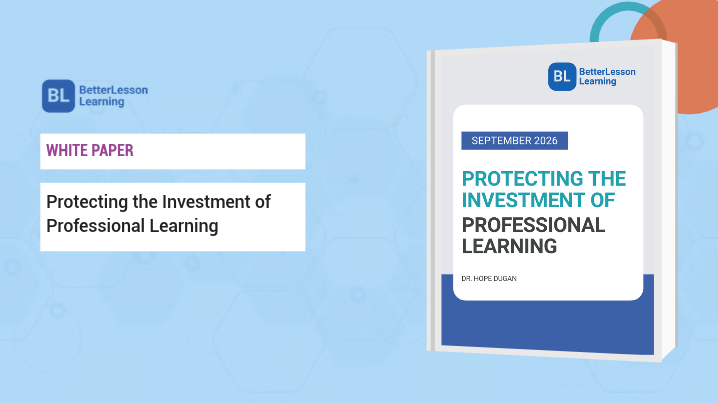
In this white paper, Dr. Hope Dugan explores why high-quality professional learning often fails to take root when introduced into a system unequipped to support it. Moving beyond quick fixes, this paper examines how viewing professional learning through a systems lens allows school and district leaders to diagnose root causes, align organizational structures, and protect their investments.
Key Takeaways
- Look Beyond the Solution: Learn why good professional learning can fail due to system-level barriers—such as conflicting schedules, lack of clear expectations, or unaligned leadership—rather than poor training.
- Understand the Improvement Ecosystem: Discover how the interconnected web of supports, structures, decisions, and culture shapes whether new instructional practices actually survive in the classroom.
- Manage the Entire Investment: Shift from evaluating training as a one-off event to managing improvement as a continuous, end-to-end process from initial diagnosis to classroom implementation.
- Leverage Implementation Data: Move beyond end-of-year outcome measures to collect actionable implementation evidence that helps leaders adapt, support teachers, and make data-informed adjustments in real time.
- Break Down Silos: Understand how connecting curriculum, coaching, professional development, and data teams builds shared visibility and drives sustained organizational change.
What’s Inside?
- When Good Professional Learning Isn’t Enough: Uncovering the two main reasons improvement efforts break down (wrong diagnosis vs. unsupportive system).
- The System Around the Solution: Applying implementation science and systems thinking (“tending to the soil, not just the plant”).
- Managing Improvement End-to-End: Moving from isolated purchasing decisions to intentional continuous improvement cycles.
- Breaking Organizational Boundaries: Connecting siloed departments around shared outcomes to protect district investments.